

Key Takeaway:
- Electronic medical records are often the strongest evidence in a Florida medical malpractice case, because the digital chart timestamps who documented what, and when.
- The visible chart is only the surface; the full electronic record holds edit histories, access logs, and timing data a printout never shows.
- For Orlando and Central Florida families, requesting the complete electronic record early is what preserves that evidence before it is overwritten or disputed.
When a loved one leaves the hospital sicker than they arrived, or does not come home at all, families are left with questions the medical record does not seem to answer. What they lived through at the bedside and what the paperwork reflects do not always match. The fuller account sits in your loved one’s electronic medical records, which in Florida are often the clearest evidence of what happened, and when, in a medical malpractice case. Knowing what those records capture, and how to obtain them, is where a family’s answers begin.
What Are Electronic Medical Records, and Why Do They Matter in a Florida Medical Malpractice Case?
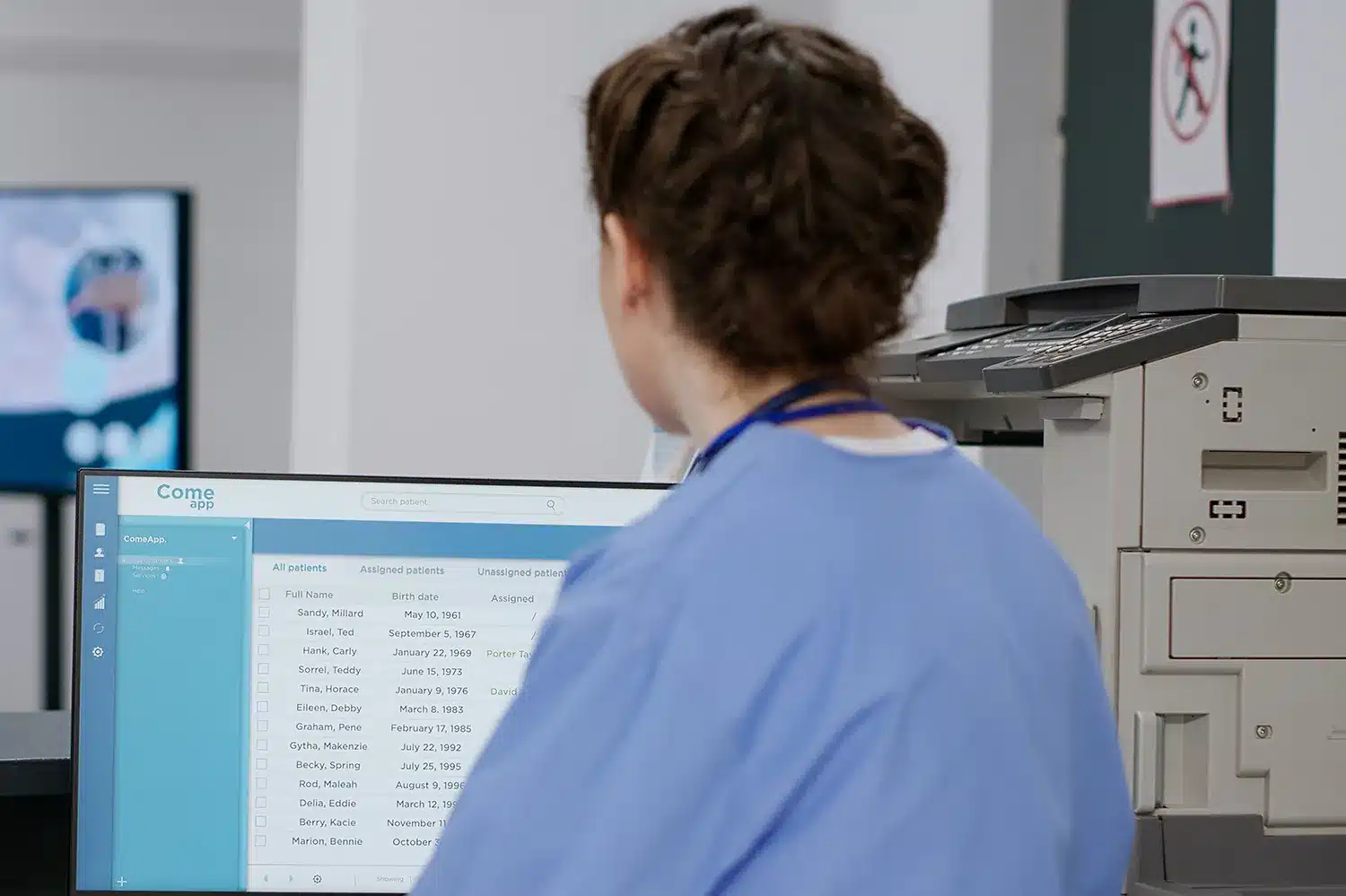
An electronic medical record is the digital version of a patient’s chart, holding physician and nursing notes, medication orders, lab and imaging results, vital signs, and the running account of care during a hospital stay or office visit. Everything a family sees on the printout also lives in that system, but the system keeps far more than it prints. Beneath the visible chart, it records the timestamps, edit histories, and access logs that turn the record into evidence:
- The timeline behind each entry. The system stamps when someone opened the chart, when they typed, and when they signed.
- The history of every change. It preserves what an entry said before a provider edited or replaced it.
- The identity behind each action. It ties a specific user to each view, entry, and order.
- The response to each result. It logs when a lab or an alert arrived, and whether anyone opened and acted on it.
A Florida medical malpractice case asks whether a provider met the accepted standard of care under Chapter 766 at a specific moment, and because the electronic medical record pins each entry, order, and result to a timestamp, it often fixes that moment to the minute and second, which is exactly why it carries the weight it does.
What Electronic Medical Record Related Events Commonly Appear in Medical Malpractice Claims?
Electronic medical record related events in medical malpractice claims are cases where the EMR itself, whether through a user’s mistake or a flaw in the system, contributed to the harm a patient suffered. Researchers sort them into two groups: user issues and system issues:
- Copy-forward and cloned notes. A provider pulls yesterday’s note forward, carrying stale information into today’s chart so that a worsening condition can look stable on paper.
- Drop-down and default-value entry errors. A menu selection, an auto-populated field, or a mistyped dose records something the provider never intended.
- Unaddressed labs and alerts. A critical result or a system warning lands in a digital inbox and sits there, unread and unacted on.
- Timing gaps. The chart says one thing happened, but the entry was created hours later, after the outcome was already known.
None of these findings proves wrongdoing on its own. Each is a reason to look closer, because the record itself is what separates an honest error from a departure from the standard of care. The stakes are real: in a 2024 Candello analysis drawing on one of the nation’s largest malpractice claims databases, cases involving these EMR and copy-and-paste errors were more likely to close with payment to the injured patient than other claims.
What Is an EMR Audit Trail, and What Can Metadata Reveal?
Every electronic medical record system keeps a log of its own activity called the audit trail, the metadata behind the visible chart. Where the printed record shows the destination, the audit trail shows the route taken to reach it.
| What the Printed Chart Shows | What the Electronic Record Also Shows |
| The final, signed note | Every earlier version, and what was edited or deleted |
| The clinician’s name on the entry | The exact time the entry was created and signed |
| A completed order or result | When it was viewed, and by whom |
| A lab result in the file | Whether anyone ever opened it, and how long it sat |
| A clean, sequential timeline | Late additions inserted after the fact |
A late entry or an edit is not proof that anyone acted in bad faith, since providers correct records for legitimate reasons every day. What the audit trail does is answer one fair question honestly: does the chart’s story hold up against its own timeline? That timeline is often the whole case, because a Florida medical malpractice claim comes down to what a provider knew and did at a specific moment, and the audit trail is where that moment is recorded. Reconstructing that timeline, and obtaining the complete record behind it, is exactly the work a Florida medical malpractice attorney takes on from the start, so no family has to untangle a hospital’s recordkeeping alone.
How Do Florida Patients Access Their Complete Electronic Medical Records?
The electronic record only helps a family that actually holds it, and Florida gives patients and their representatives across Orlando and Central Florida a clear right to obtain it. Requesting the complete record, rather than a summary printout, follows a few concrete steps:
- Put the request in writing. Both governing statutes require a properly worded written request before records must be furnished.
- Ask for the complete electronic record. Name what should be preserved, including the full chart, edit and version history, and the audit trail.
- Direct the request to the right holder. For a hospital or other licensed facility, Section 395.3025 requires the facility, after the patient’s discharge, to furnish a true and correct copy of all patient records in its possession, in a timely manner and without delays for legal review, and to allow examination of the originals on reasonable terms. For an individual practitioner, Section 456.057 requires the same on written request by the patient or their legal representative.
- Act early. Systems overwrite and recycle data on their own schedules, so the sooner a request goes in, the more the record captures.
- Involve counsel when the response is incomplete. When a provider furnishes only a printout, an attorney can compel the full electronic record and its audit trail through discovery, backed by the federal 21st Century Cures Act rule against information blocking of electronic medical information.
Both statutes cap copying charges, waive the fee entirely when records are copied for continuing care, and bar the “delays for legal review” that facilities sometimes use to slow a request. The right to the record is firm; using it well is where experienced representation makes the difference.
How Does an Experienced Florida Medical Malpractice Attorney Use the Electronic Record?
An attorney does not read the audit trail in isolation. They line it up against the rest of the file and look for the points where the pieces stop fitting together:
- Medication administration records, to confirm when a drug was actually given.
- Nursing notes, to see when symptoms were reported and what staff observed.
- Lab and imaging timestamps, to fix when results came back and who saw them.
- Discharge paperwork and orders, to test what the patient was told against what the chart shows.
When a note was signed hours or days after the event it describes, or an order was entered after a treatment decision was already made, the mismatch becomes something a jury can see. These cases are defended aggressively by hospitals and their insurers, but Warner and Warner has spent decades building this kind of timeline for injured patients and families across Orlando and Central Florida, litigating to and through verdict when a case demands it. The firm’s case results and client testimonials reflect that work.
Frequently Asked Questions About Electronic Medical Records in Florida Malpractice Cases
Once families in Orlando and Central Florida understand how electronic medical record-related events in medical malpractice claims come to light, the same practical questions follow. Here is how Warner and Warner answer each:
- Who Owns the Electronic Medical Record, the Patient or the Hospital?The provider or facility owns the physical record, but the patient holds the legal right to obtain a copy and to inspect the original. Ownership of the file does not let a provider withhold it from the patient it documents.
- Can I Get a Deceased Family Member’s Electronic Medical Records in Florida?Yes. Florida law lets a personal representative of the estate, and in some cases the next of kin, request the records of a deceased patient.
- Will the Hospital Know If I Request the Audit Trail?Yes, and it is a routine request, not an accusation. Asking for the complete electronic record rather than a printout simply ensures a family receives everything the law allows.
- Does Requesting Records Work Differently Once a Malpractice Claim Is Underway?Yes. Section 766.204 requires a provider to furnish medical records relevant to a medical negligence claim within 10 business days of a request, at a reasonable charge, and a provider cannot refuse because the records are unfinished or a bill is unpaid. If a provider ignores that deadline, the delay counts against them as a failure to cooperate in good faith, which works in the family’s favor. This deadline is one of several that shape a case, and the timeline for a Florida medical malpractice lawsuit shows how they fit together.
- How Long Do Florida Providers Have to Keep Electronic Health Records?Retention periods are set by regulation and vary by provider type rather than by a single statute. Because systems purge and overwrite data on their own schedules, the safest course is to request records early.
- How Much Can a Provider Charge for Electronic Copies of My Records?Florida caps these charges. A patient whose records are copied for continuing care is not charged at all, and the per-page limits are set by statute and administrative rule. For electronic copies of records already kept electronically, federal law caps the fee at a flat rate.
“The chart is not necessarily the whole story. The electronic record keeps its own timeline, and when we lay that timeline next to the labs and the nursing notes, the truth about what happened, and when, tends to come forward.”— Scot Warner, Warner and Warner.
Talk With Warner and Warner About Your Family’s Medical Records
Families come to Warner and Warner because something about a loved one’s care does not add up, and the paperwork they were given does not answer it. The firm reviews the complete electronic health record, tests it against the timeline of care, and gives families an honest read on what it shows. To discuss a loved one’s care with an experienced Orlando and Central Florida medical malpractice attorney, contact Warner and Warner for a confidential consultation. There is no fee unless there is a recovery.