

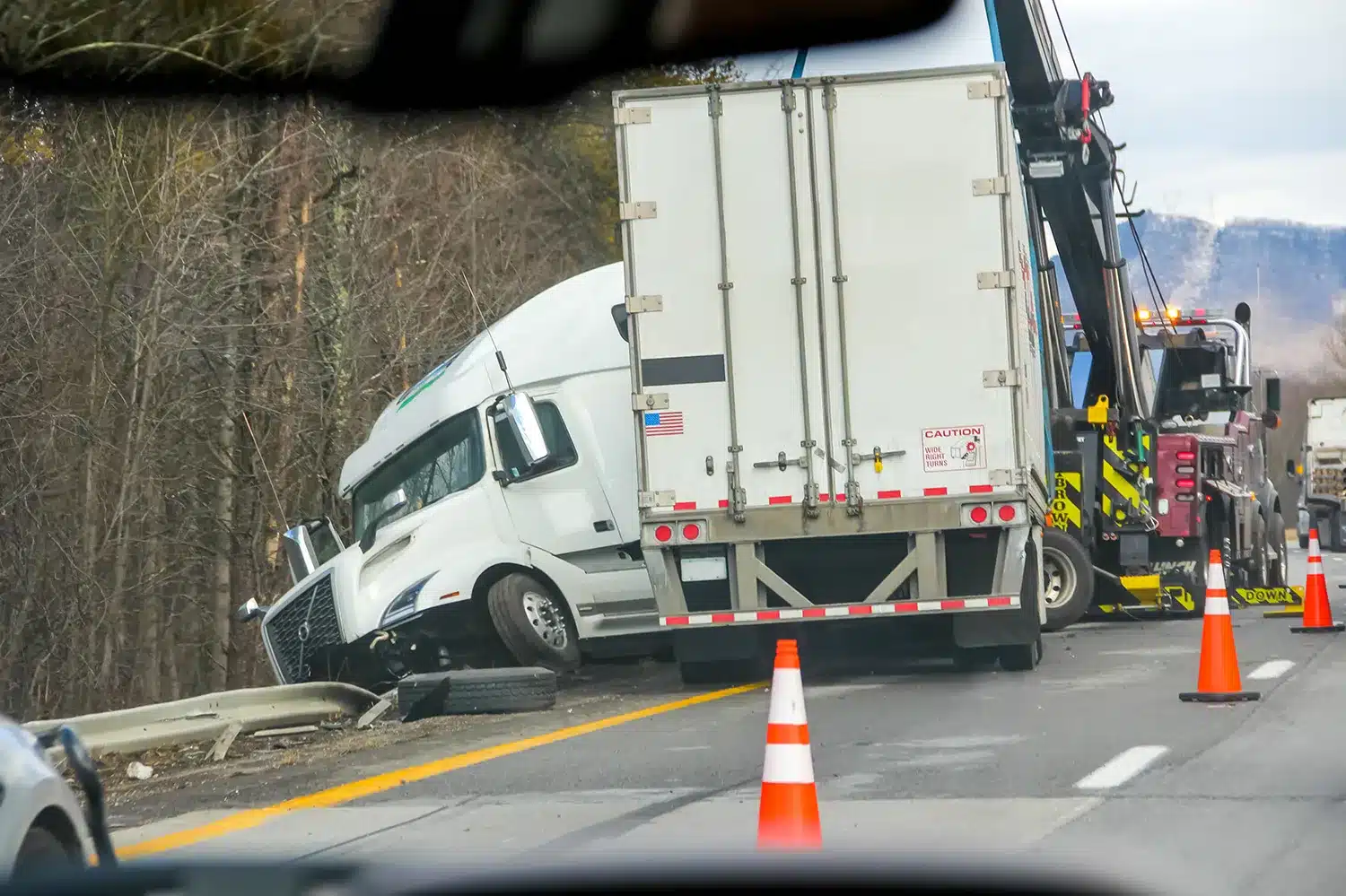
In the hours after a truck crash, an Orlando family is focused on survival, surgeries, and unanswered questions, while the trucking company is already focused on the truck and building its defense. Inside the truck sits the ECM black box records of the truck’s speed, braking, and driver behavior in the final seconds before impact. In truck accident litigation, black box data can be the difference between proving what the truck actually did and leaving those facts to the driver’s account alone. But that proof is fragile, and it can be overwritten within days. Knowing what these ECM records reveal, and why timing decides whether they survive, is what protects a family’s case before it is filed.
What Is a Truck’s Black Box, and What Does the ECM Record?
Most modern commercial trucks have an onboard computer called the Engine Control Module (ECM), sometimes referred to as the electronic control module and often called the truck’s “ECM black box.” As it runs the engine, the ECM continuously logs data that becomes an objective, machine-generated record of the truck’s actions in the seconds before impact. Depending on the engine manufacturer, ECM records may capture:
- Vehicle speed in the moments leading up to the collision.
- Brake application,including whether or when the brakes were used and with what force.
- Throttle position and engine RPM, showing acceleration or sudden deceleration.
- Cruise control status at the time of the crash.
- Hard-braking or sudden-deceleration events flagged automatically.
- Diagnostic trouble codes indicating pre-existing mechanical problems.
- Engine hours and driving time, relevant to the truck’s operating duration.
Retrieving this data requires proprietary, manufacturer-specific tools and a qualified engineering/accident-reconstruction expert, which is why prompt legal action to reach the truck can protect the evidence a family needs while it still exists.
What Can ECM Black Box Data Prove About Fault?
When a qualified accident-reconstruction expert preserves and analyzes the ECM black box data, it can settle the questions a trucking company often disputes, such as how fast the truck was traveling and whether the driver braked in time. In an expert’s hands, those readings support the theories that decide a truck accident case:
- The driver was speeding when the recorded velocity exceeded the posted limit for the road and conditions.
- Fatigue or distraction played a role when late or absent braking coincided with hours-of-service data showing too much time driving.
- The carrier ignored a known danger when fault codes show a mechanical problem like failing brakes that was never repaired.
- The company, not just the driver, is liable when data shows negligent maintenance, dispatch pressure, or scheduling that broke federal limits.
This kind of objective proof often turns a disputed claim into a clear one. It can also expose the trucking company’s own negligence, which is part of what sets a truck accident claim apart from a standard car accident claim.
ECM, EDR, and ELD: What’s The Difference Between These Data Systems?
The ECM isn’t the only recorder on a commercial truck. The “black box” is really a set of systems, and telling them apart matters because each records different information and survives for a different length of time.
| System | What It Records | Typical Retention Before Loss |
| Engine Control Module (ECM) | Speed, braking, throttle, RPM, cruise control, fault codes, engine hours. | Rolling record; event data can be overwritten within days, and operational data often within about 30 days. |
| Event Data Recorder (EDR) | A focused snapshot of vehicle dynamics seconds before and after a triggered event. | Event capture can be overwritten by later events or lost during vehicle repairs. |
| Electronic Logging Device (ELD) | Driver duty status, driving hours, engine on/off, vehicle motion, location. | Six months on the carrier’s system under federal rule; the onboard copy covers the current day plus the prior seven. |
These systems run on different clocks. Federal regulations require carriers to retain ELD hours-of-service records for six months, making driver-fatigue evidence sometimes recoverable well after a crash. ECM and EDR event data, which can pinpoint the collision itself, can be overwritten within days.
Why Does Timing Matter With Black Box Data in Truck Accident Litigation?
Timing matters because the most decisive black box data in truck accident litigation is often gone within days, not months. The ECM stores crash data on a rolling loop that overwrites itself as the truck keeps operating, and several forces can erase it quickly:
- Overwritten data. The rolling buffer holds only so much, so older event captures are steadily overwritten as the truck accumulates engine hours.
- Vehicle repairs or return to service. A truck that is repaired can lose its stored crash data, sometimes permanently.
- Power disconnection. Disconnecting the battery, jump-starting the truck, or cutting power to the module can scramble the stored data even if the truck is never driven again.
- A totaled or sold vehicle. Trucks in serious crashes are sometimes repaired, scrapped, or sold within weeks, taking the data with them.
- Dashcam auto-deletion. Where a truck has forward-facing or driver-facing cameras, that footage often overwrites on a short cycle, sometimes within a few days.
The evidence is not the only thing on a deadline. Since Florida’s House Bill 837 took effect on March 24, 2023, most negligence claims must generally be filed within two years, a shorter window than many families expect. One clock runs for years and the other for days, but both point the same way: acting sooner keeps more of the evidence recoverable.
How Is Black Box Data Preserved for Truck Accident Litigation in Florida?
Trucking companies and their insurers value this data, and many send rapid-response teams to download ECM and EDR data before the injured family has representation, one tactic insurers use to reduce the value of serious injury claims. Families can level that imbalance by acting quickly, and the first move is a spoliation letter. Sent soon after the crash, this preservation letter puts the carrier under a legal duty to preserve the following in their current state:
- The truck itself, prohibiting repair, sale, or return to service.
- ECM and EDR data, halting any overwriting of the stored crash record.
- Driver logs and ELD records, including the full edit history.
- Inspection and maintenance records for the tractor and trailer.
- Any forward-facing and driver-facing camera footage.
What If the Trucking Company Destroys the Data?
Under Florida law, an injured person generally cannot sue separately for destroyed first-party evidence, a rule the Florida Supreme Court settled in Martino v. Wal-Mart Stores, Inc. The court addresses the loss inside the existing case: if a carrier destroys evidence after a preservation letter, the judge can instruct the jury to infer that the missing data would have hurt the company. Because that window closes quickly, families should reach out to Warner and Warner to review their situation while the evidence still exists.
What Orlando Families Ask About Truck Black Box Data
In the shock after a crash, black box data is the last thing on a family’s mind, so these are the questions Warner and Warner hear from Orlando and Central Florida families.
- Who Can Download the ECM Data?
In truck accident litigation, black box data downloads are usually handled as a joint inspection, with a qualified expert extracting the data while engineers for both sides observe, so neither party can later claim the record was altered during retrieval.
- What If the Truck Has Already Been Repaired or Sold?
Other records may survive, including the carrier’s ELD data, dispatch and payroll records, and off-truck telematics, so a case is not necessarily lost, though recovering it becomes harder and reinforces the value of acting early.
- Does the ECM Black Box Prove the Whole Case?
Rarely on its own. The data is strongest when an expert overlays it with physical scene evidence, witness accounts, and driver’s logs to build a consistent, second-by-second account of the crash.
“Families come to us frightened and unsure, often days after a crash, not realizing the truck that hurt them is already being repaired. Our job is to move fast, protect that evidence, and ensure the numbers–not the trucking company–tell the crash story.” — Debbie Warner, Warner and Warner.
Talk to an Orlando Truck Accident Attorney Before the Evidence Is Gone
After a truck crash, an Orlando family shouldn’t have to chase vanishing evidence while they heal. The trial attorneys at Warner and Warner move early to preserve ECM records and pursue accountability and recovery for injured families. See how the firm has helped families like yours in its case results and testimonials, and if you or a loved one was hurt in a commercial truck crash, contact Warner and Warner for a confidential consultation.
About The Author

After a commercial truck crash in Florida, liability rarely rests on the driver alone. Learn how trucking companies, cargo loaders, maintenance contractors, and manufacturers can all share the blame, and why identifying every liable party is critical for securing adequate compensation.

Federal Hours of Service rules and ELD logbook data track a trucker’s exact time on the road. Learn how proving driver fatigue and log violations can strengthen your Florida truck accident claim.
The assumption that truck accidents work like car accidents undermines claims before they begin. Here's what actually makes them different.